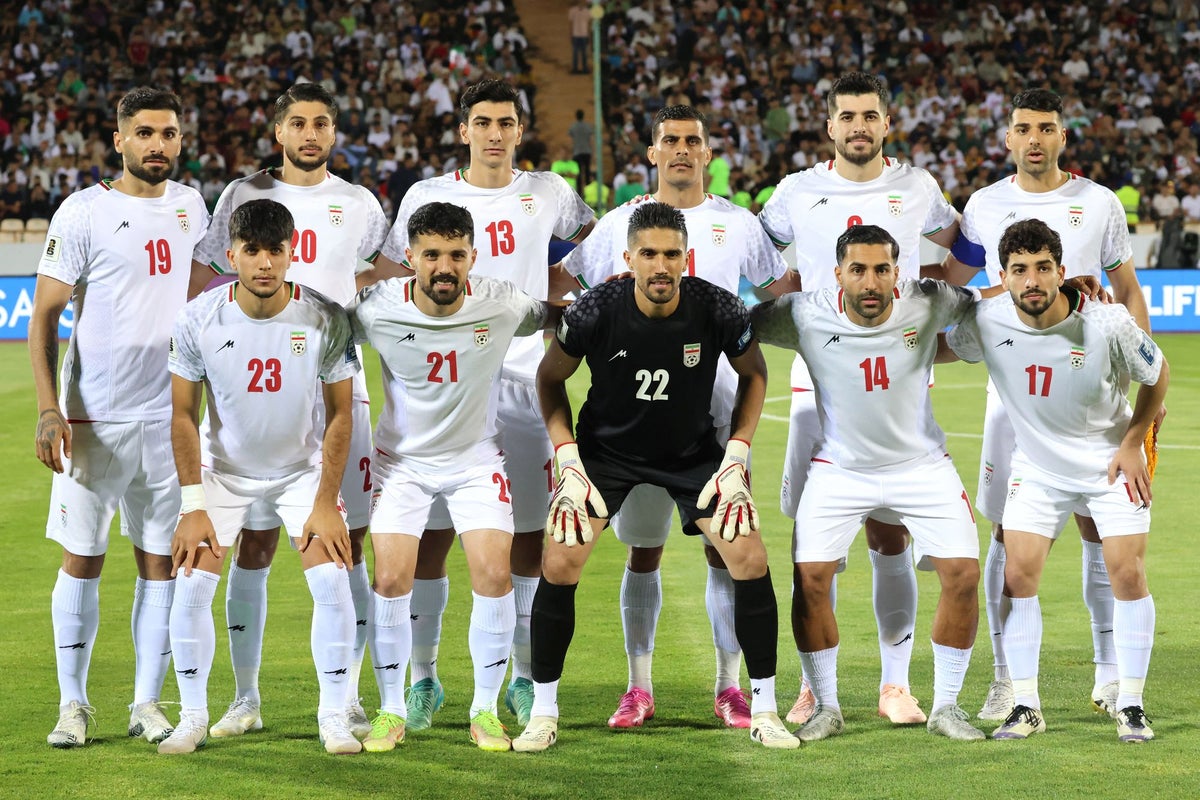
US Co-Host Dilemma: Iran's World Cup 2026 Spot Under Scrutiny Amid Escalating Conflict
The anticipation for the FIFA World Cup 2026, set to be co-hosted by Canada, Mexico, and the United States, is palpable worldwide. Yet, for one qualified nation, Iran, participation is now shrouded in deep uncertainty. With less than 100 days until the opening game on June 11, a rapidly escalating conflict in the Middle East has cast a long, ominous shadow over Iran's expected journey to North America, placing its coveted
iran world cup 2026 spot under intense scrutiny. The dilemma facing the US as a co-host, balancing international sport with severe geopolitical tensions, is unprecedented.
The Geopolitical Quagmire: Conflict's Impact on Football
The recent surge in hostilities between the US/Israel and Iran has dramatically reshaped the global landscape, extending its tendrils even into the realm of international sport. Reports indicate that US and Israeli forces launched significant attacks on Iran, resulting in considerable casualties, including its Supreme Leader Ali Khamenei, and triggering a broader regional conflict affecting at least 12 countries. Tehran’s swift retaliation involved waves of missiles and drones targeting Israel and US military bases across the Middle East.
This explosive environment makes the prospect of Iran, currently the world’s 20th-ranked football nation, traveling to and playing within the United States a profound challenge. US President Donald Trump, weighing in on the situation, expressed indifference regarding Iran’s World Cup presence, stating to Politico, “I think Iran is a very badly defeated country. They’re running on fumes.” This sentiment underscores the deep political chasm that currently exists, making diplomatic solutions incredibly difficult.
The Football Federation of the Islamic Republic of Iran (FFIRI) has echoed this despair. Its president, Mehdi Taj, lamented to Varzesh3, “After this attack, we cannot be expected to look forward to the World Cup with hope.” This statement encapsulates the grim reality facing the national team, whose aspirations of competing on football’s grandest stage are now overshadowed by conflict and uncertainty.
Logistical Nightmares and Diplomatic Roadblocks for Iran World Cup 2026
The practical hurdles confronting Iran’s participation are immense and arguably insurmountable within the short timeframe. Simon Chadwick, a professor of Afro-Eurasian sport at the Emlyon Business School in Shanghai and a leading expert on sports and geopolitics, characterizes the situation as "uncharted territory." He firmly believes that Iran’s presence in the tournament is in "serious doubt" given the armed conflict involving one of the host nations and a participant.
Chadwick highlights the significant challenge of gaining entry into the United States. "It’s very difficult to see the US allowing players, backroom staff and officials to enter the country," he told Al Jazeera. The rigorous visa and security protocols that apply to any international visitor would undoubtedly be amplified for a delegation from a nation in direct conflict with the host. This extends beyond just the players to include medics, coaches, support staff, and even accompanying media and federation officials. The logistical quagmire makes it almost impossible for Iran to navigate the complex travel and entry requirements in a timely and secure manner.
FIFA, typically committed to the principle of separating politics from sport, finds itself in an unenviable position. While officials from both the FFIRI and FIFA have remained noncommittal, the reality on the ground dictates that political realities often trump sporting ideals. The global football body faces immense pressure to uphold the integrity of the tournament while also respecting the sovereignty and security concerns of a host nation. The question remains: how will FIFA navigate this unprecedented challenge? Will it seek a diplomatic resolution, or will the pragmatic need for security prevail? For more detailed analysis on this developing situation, read our related article:
Iran World Cup 2026: Conflict Puts Participation in Serious Doubt.
The Unpalatable Choice: Withdrawal or Disqualification?
Given the formidable obstacles, a potential withdrawal by Iran from the World Cup 2026 is a scenario increasingly discussed among experts. Professor Chadwick suggests that a "diplomatic solution will be that Iran itself just steps aside and withdraws from the tournament." While seemingly the most straightforward path to avoid further complications for all parties, this decision is far from easy for Iran.
Withdrawing from a FIFA World Cup carries significant consequences, both sporting and reputational. For the players, it would mean the crushing disappointment of missing a once-in-a-lifetime opportunity to represent their nation on the world’s biggest stage. For the FFIRI, it could entail substantial financial penalties from FIFA, including potential fines and forfeiture of any prize money. Moreover, the long-term impact on national pride and the development of football within the country would be profound.
Iran, having worked tirelessly through qualifiers to secure its spot, would be reluctant to forfeit its hard-earned place. As Chadwick notes, they will "think very long and hard before walking away." However, the alternative – attempting to force entry against the wishes of a host nation and facing potential visa denials, security risks, or even a FIFA disqualification – might be even more detrimental. The choice between withdrawing and risking disqualification underscores the severe bind Iran is currently in. For further insights into this difficult decision, explore:
Will Iran Withdraw? Analyzing World Cup 2026 Chances Amid Crisis.
Beyond the Pitch: The Human Element and Fan Experience
While the focus often remains on geopolitical tensions and logistical challenges, it's crucial to remember the human element at the heart of this dilemma. For Iranian players, coaches, and staff, the World Cup represents the pinnacle of their careers – a dream pursued through years of dedication and sacrifice. To have this dream potentially snatched away by events entirely beyond their control is a tragic outcome.
Moreover, the extensive Iranian diaspora around the world, particularly in North America, would be deeply affected. These fans, who passionately support their national team, would miss the opportunity to witness their heroes compete in person, a rare occasion that transcends mere sport and becomes a powerful symbol of national identity and unity. The vibrant atmosphere that fans bring to a World Cup match is part of its global appeal, and the absence of a participant nation due to conflict would undoubtedly diminish the tournament's spirit.
The situation also serves as a stark reminder of how deeply intertwined global politics and major sporting events have become. While sport often seeks to offer an escape from real-world troubles, it is frequently impacted by them. The World Cup 2026 was envisioned as a celebration of global unity and athletic excellence; the current dilemma surrounding
iran world cup 2026 participation highlights the fragile nature of such ideals in a turbulent world.
Conclusion: An Unpredictable Path Forward
The issue of Iran's World Cup 2026 participation remains highly volatile, with no clear resolution in sight less than 100 days from kickoff. The severe geopolitical conflict involving a co-host nation makes Iran's entry into the US a monumental, if not impossible, challenge. While FIFA strives to protect the sporting integrity of its flagship event, the security and sovereignty concerns of the United States cannot be overlooked.
The most likely, albeit painful, outcome appears to be Iran's withdrawal or disqualification, a decision that would mark a significant moment in the intersection of sport and politics. Regardless of the final outcome, this unprecedented dilemma underscores the profound impact that real-world conflicts can have on global events and the dreams of athletes and fans alike. The eyes of the football world and beyond will remain fixed on this developing story, hoping for a resolution that, ideally, minimizes further heartache.